The Myth of “I’m Not Academic”
Many adults carry a quiet belief about themselves.
It might sound something like this:
I’m not very academic.
School was never really my thing.
Other people are better at studying than I am.
Often these beliefs formed years ago — sometimes decades ago — in classrooms where learning was measured in very narrow ways.
Maybe you struggled with memorisation.
Maybe exams made you anxious.
Maybe the pace didn’t suit how your mind worked.
Over time, those experiences can shape how we see ourselves.
And eventually, a label forms.
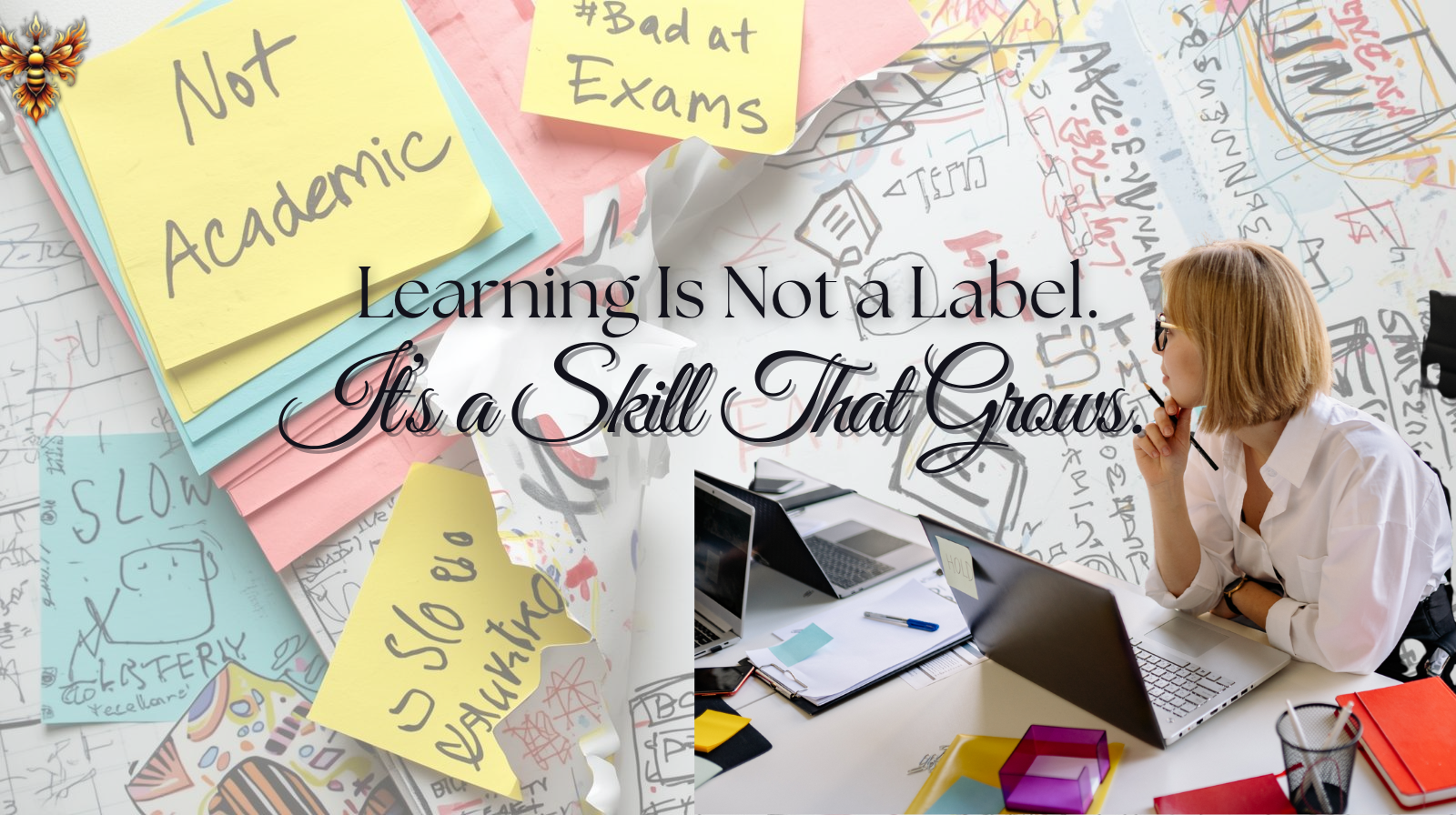
Not academic.
But labels like this rarely tell the whole story.
Because learning isn’t one fixed ability.
It’s a collection of skills — attention, curiosity, reflection, and problem solving.
And those skills can develop throughout life.
Common Challenges
When people consider returning to study or learning something new, a few familiar doubts often appear:
Old school memories.
Experiences from early education can still influence confidence decades later.
Comparing yourself to others.
It’s easy to assume everyone else finds learning easier.
Fear of embarrassment.
Many people worry about asking questions or getting things wrong.
Perfection pressure.
You may feel you need to perform well immediately to justify trying again.
These concerns are understandable.
But they don’t define your learning potential.
How to Move Through It
Question the story.
Ask yourself: where did this belief about being “not academic” come from?
Focus on process, not performance.
Learning improves when you concentrate on understanding rather than proving yourself.
Use your life experience.
Adult learners bring insight, perspective, and motivation that younger students often haven’t yet developed.
Allow yourself to be a beginner.
Every skill starts somewhere.
Reflection Prompt
✨ What belief have you carried about yourself as a learner?
✨ And what might shift if that belief was simply an old story — rather than a permanent truth?
Many people rediscover something surprising when they return to learning later in life.
They’re not starting from scratch.
They’re starting from experience.
When learning becomes connected to real life, curiosity often replaces anxiety — and confidence grows naturally.
OurLearn2Learn program was created with exactly this shift in mind.
It helps women understand how their brain, body, and attention work together — so learning becomes something supportive rather than stressful.
Because the truth is simple.
You were never “not academic.”
You simply hadn’t yet discoveredhow you learn best.