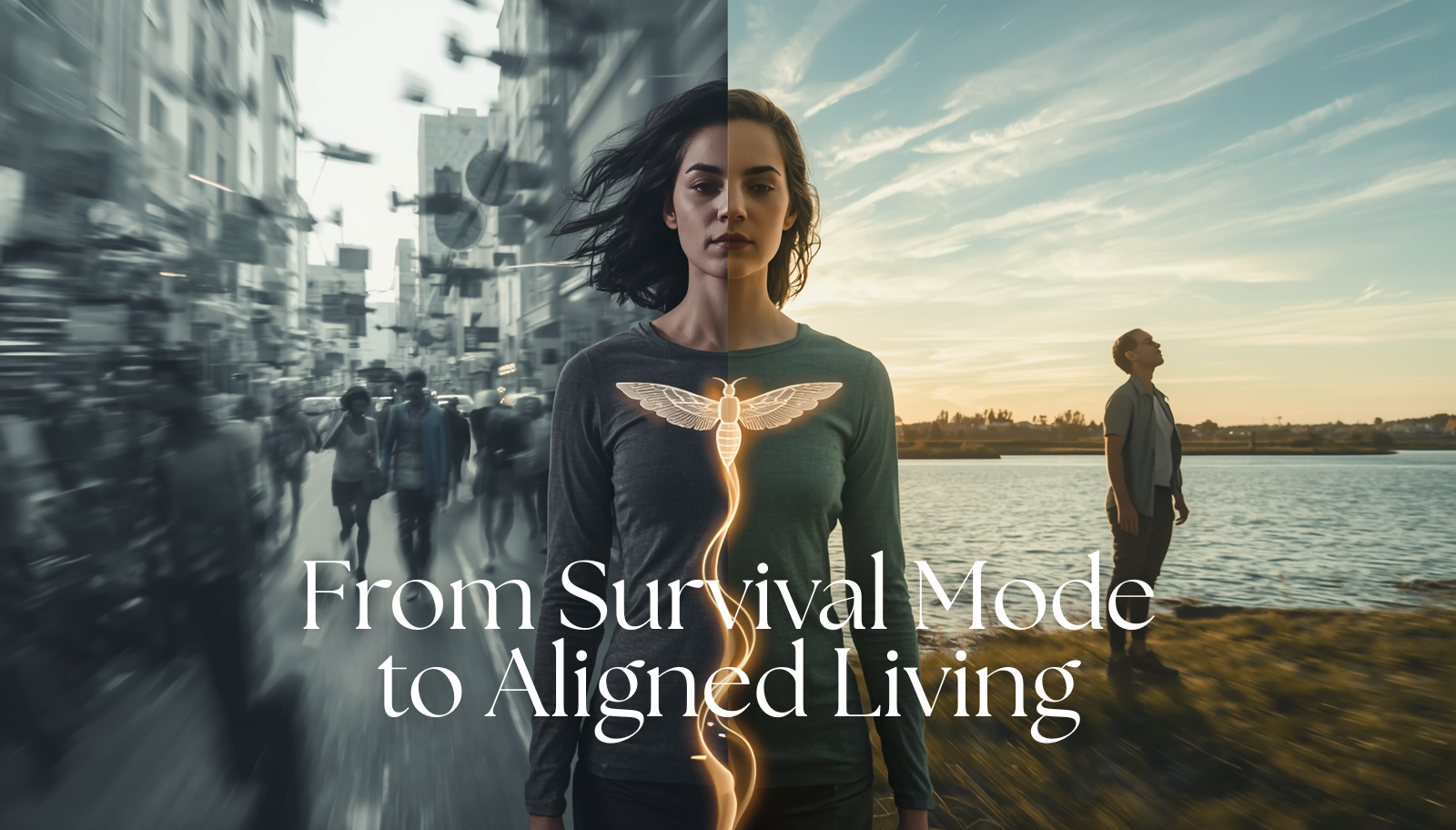
For many people, life can quietly become a cycle of reaction.
Responding to responsibilities.
Managing deadlines.
Solving problems as they arise.
There’s little space to pause or reflect.
Everything feels urgent.
Over time, this pattern can place our nervous system in a constant state of alertness — what many people recognise as survival mode.
In survival mode, our focus narrows.
We prioritise immediate tasks.
We respond quickly to pressure.
We keep moving because stopping feels risky.
But while survival mode can help us navigate challenging periods, it isn’t designed to support long-term wellbeing.
Eventually, something inside us begins asking for a different way of living.
One that feels steadier.
More intentional.
More aligned.
Common Challenges
When people begin shifting away from survival mode, they often encounter:
Difficulty slowing down.
Rest can feel unfamiliar after long periods of busyness.
Fear of losing productivity.
You may worry that stepping back will reduce your effectiveness.
Emotional release.
As the nervous system relaxes, previously suppressed emotions may surface.
Uncertainty about new rhythms.
It can take time to develop habits that support alignment.
These experiences are natural parts of transition.
How to Move Through It
Create moments of pause.
Even brief periods of reflection can shift your nervous system.
Notice your natural rhythms.
Pay attention to when you feel most energised and focused.
Prioritise sustainable habits.
Small, consistent practices support long-term balance.
Allow life to evolve gradually.
Aligned living develops over time rather than through sudden change.
Reflection Prompt
✨ Where in your life are you still operating in survival mode?
✨ What might aligned living look like for you instead?
Moving beyond survival mode doesn’t mean life becomes effortless.
But it does mean you begin living in a way that supports your wellbeing rather than constantly challenging it.
And from that foundation, growth becomes much more sustainable.